
Understanding Slowly Changing Dimensions (SCD) in Data Warehousing

As a data engineer, I’ve seen firsthand how crucial Slowly Changing Dimensions (SCD) are in maintaining the integrity and accuracy of data in a warehouse. Today, I’ll walk you through the different types of SCDs, sharing practical examples and insights to help you understand how to handle changes in your data effectively.
Introduction
In data warehousing, managing changes in data over time is essential. Slowly Changing Dimensions (SCD) are methods that address this need, ensuring historical accuracy and reliable data for analysis. Let's explore what SCDs are and the various types available to handle different scenarios.
What is Slowly Changing Dimension (SCD)?
Slowly Changing Dimensions refer to the methods used to manage and track changes in dimensional data over time. Unlike transactional data, which changes frequently, dimensional data—such as customer information—changes slowly but significantly. Properly handling these changes ensures historical accuracy and reliable data for analysis.
Types of SCD
Let's delve (yes, I said it, lol) into the different types of SCDs.
1.0 SCD Type 0: Retain Original
Type 0 is the most straightforward method: you don't change the data once it's in the warehouse. This approach is suitable for data that rarely, if ever, changes.
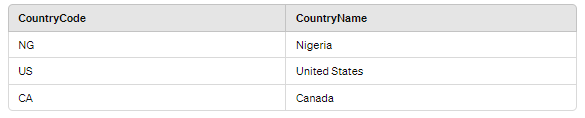
Since country names and codes are static and unlikely to change, you use Type 0 for this dimension. This approach is ideal for static data like country codes or product categories that rarely change. Essentially, you are saying, "Once this data is in, it stays as it is." This method is straightforward and requires no additional mechanisms to track changes because the data is considered constant.
2.0 SCD Type 1: Overwrite
Type 1 involves overwriting the existing record with the new data, without retaining any historical data. This method is simple but doesn't keep track of changes over time.
For example, a customer updates their email address. Here’s how the table looks before and after the update:
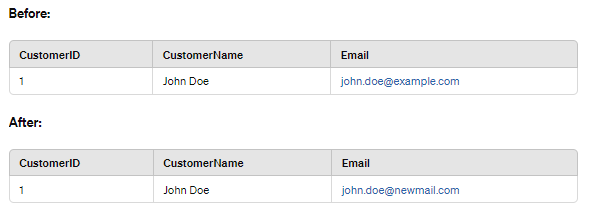
In this case, the old email address is lost, as we simply overwrite it with the new one. This method is suitable for non-critical information updates, such as a customer’s phone number or email address, where historical data isn’t necessary. It’s a simple and efficient way to keep the most current information in your records, but it sacrifices the ability to track changes over time.
3.0 SCD Type 2: Add New Row
Type 2 is about adding a new row to keep historical data. This method allows you to track changes over time, with each change resulting in a new record.
For example, a customer changes their address. Here’s the table:
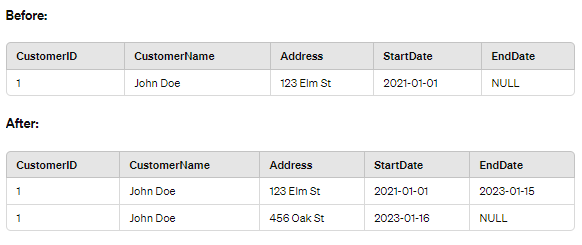
In this scenario, the old address is retained with an end date, and the new address is added with a start date. This approach is perfect for tracking changes in customer addresses or job titles where historical accuracy is important.
By retaining the old address and associating it with an end date, you create a complete history of where the customer has lived. Each row in the table represents a period during which a particular address was valid. This means you can see not only the current address but also all previous addresses, along with the dates during which each address was valid. This is crucial for businesses that need to understand the full history of customer data, such as for compliance reasons, targeted marketing, or customer service improvements. It allows you to maintain a complete history of changes, making it ideal for analysis that requires understanding the evolution of data over time.
4.0 SCD Type 3: Add New Column
Type 3 stores the new data in a new column while keeping the old data. This method is limited because it only captures a finite number of changes.
For example, a company changes its name as seen in the tables below:
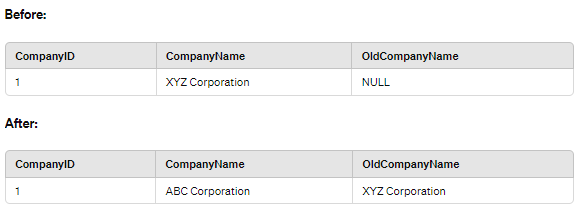
Type 3 is useful when you need to keep track of a few changes, like a company rebranding. This is especially useful for limited change tracking, such as a company’s name change or product rebranding. It adds new columns for each change, allowing you to keep a history of changes without adding new rows, but it’s limited to a small number of changes due to the finite number of columns that can be practically added.
5.0 SCD Type 4: Using Historical Table
Type 4 involves maintaining a separate historical table to keep track of changes, while the main table contains only the current data.
Tracking employee roles over time. Here’s how the main and historical tables might look:
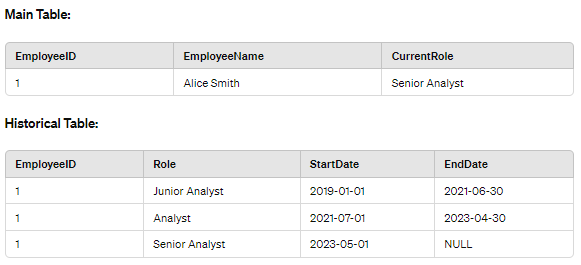
The historical table keeps a record of all past roles, while the main table shows the current role. This method is best for scenarios requiring comprehensive historical records, such as tracking employee roles or sales figures over time. By separating the current and historical data into different tables, you can maintain a clean and efficient main table while still preserving all the historical information for detailed analysis.
In other words, the main table remains small and efficient, containing only the current data. The historical table, on the other hand, grows over time as it stores all the previous versions of the data. This separation allows you to quickly access the current state of the data while still having the ability to perform in-depth historical analysis when needed. For example, a company's HR department might use the main table to see who currently holds each position, while analysts might use the historical table to study trends in employee roles and promotions over the years.
6.0 SCD Type 6: Hybrid Method
Type 6 combines aspects of Types 1, 2, and 3, capturing both current and historical data.
For example, a product’s price changes. Here’s how the table might look:
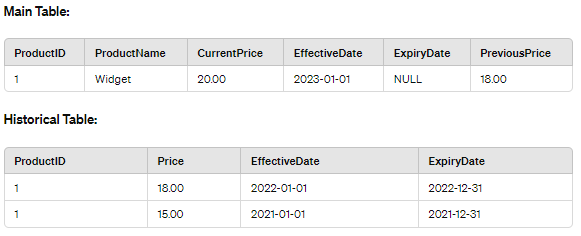
The main table captures the current and previous prices, while the historical table maintains all past prices. Type 6 works well for complex scenarios needing both current and historical data, such as tracking product prices over time along with the latest price. It provides a comprehensive view by combining elements of other SCD types, ensuring that you have both the most recent data and a complete history for analysis.
This method is particularly useful when you need to see both the current and historical states at a glance. For instance, a retail company might use the main table to display the current product prices on their website, while the historical table can be used to analyze pricing trends and customer response to price changes over time. This combined approach offers a versatile solution that meets both immediate operational needs and long-term analytical requirements.
Conclusion
Slowly Changing Dimensions are a fundamental aspect of data warehousing that help manage and preserve the historical accuracy of data. By understanding and implementing the appropriate SCD type, you can ensure that your data warehouse remains accurate, reliable, and useful for analysis. Remember, the choice of SCD type depends on your specific business needs and the importance of historical data.
With the right SCD strategy, you can maintain a robust and insightful data warehouse, providing valuable insights and supporting informed decision-making.